
Continuous Subcutaneous Infusions / Syringe Drivers
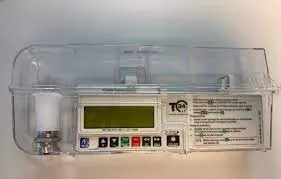
The syringe driver is a battery-powered pump that delivers medications subcutaneously over 24 hours. It is a method of drug administration that does not require the patient to swallow or absorb medication and has minimal impact on mobility and independence. It can also enhance symptom control by achieving steady drug concentrations rather than peaks and troughs.
Before commencing a syringe driver we must discuss and explain to patients and those that care for them the rationale for starting, the medications used, and the possible side effects. If there is a patient information leaflet available, do offer this also.
Indications
Section titled “Indications”- Administration of medications when the oral route is unavailable or unreliable
- Severe nausea and vomiting
- Head and neck tumours
- Intestinal obstruction
- Decreased level of consciousness
- Patient preference
- When patient has required 3 or more PRN injections in 24 hours
Prescribing a CSCI
Section titled “Prescribing a CSCI”- If on regular medications that can be converted to SC give the equivalent dose in 24 hours via CSCI
- If patient has been needing PRNs along with regular medications add the equivalent, they have used
- Titrate doses according to PRN use in every 24 hours
- If using multiple drugs, check compatibility (appendix 1)
- Dilute up to 17mL in a 20mL syringe or 23mL in 30mL syringe with either water for injection or 0.9% saline depending again on compatibility, e.g. cyclizine will precipitate in saline so must be diluted in water
Setting up the Syringe Driver
Section titled “Setting up the Syringe Driver”- Refer to local policy and guidelines
- Should only be set up by those with appropriate training to do so
- Check the battery is in good working order
- Using a Luer Lock syringe, draw up the medications and diluent to the required volume
- Label the syringe with all included medications, their doses, the patient’s name, and the start time
- Prime the line with this syringe
- Site the line in an area with good depth of subcutaneous tissue, avoiding bony prominence e.g. upper thigh, abdominal wall
- Check the syringe and infusion site regularly
- Change infusion site every 2-3 days
Practical points
Section titled “Practical points”- Use the fewest different medications as possible, to avoid incompatibility reactions
- It can take up to six hours after starting a CSCI for medications to reach a steady plasma state so additional PRNs may still be needed in that time
- If site reactions occur consider switching diluent, switching known irritant medications for an alternative, increasing the volume of dilution, adding 0.5mg dexamethasone or in extreme cases splitting medications into separate CSCIs
- Avoid direct heat or sunlight as this may cause drugs to precipitate in the syringe
- Ensure syringe driver is returned to issuing location once patient passes away