Anticipatory Prescribing
This is the practice of literally anticipating what a patient’s symptom control needs might be and prescribing for these eventualities. This includes consideration of the most appropriate route of administration as when a patient is dying swallowing almost always becomes difficult. Prescriptions will cover the as needed medications (prn) and ongoing symptom control considering what they are/were taking when able to swallow, which may require a continuous subcutaneous infusion (CSCI). These will need to be prescribed on the hospital drug chart for inpatients but a community drug chart for those outside the acute hospital.
Symptoms and the subcutaneous medications used for these, which commonly develop in the last hours or days of life include:
- Opioids chosen per renal function and previous opioid exposure and tolerance
- Morphine sulphate 2.5mg -5mg (eGFR >60)
- Oxycodone 1mg-2mg (eGFR 30-60)
- Alfentanil 0.125mg-0.25mg (eGFR <30)
It is important to consider availability and familiarity of these medications e.g. alfentanil is not commonly used in the community and can be difficult to source. Therefore a lower dose or reduced frequency of oxycodone may be more appropriate in patients with eGFR <30, with close monitoring for toxicity.
Nausea
Section titled “Nausea”- Haloperidol 0.5mg
- In Parkinson’s disease ondansetron 4mg may be considered but special care must be taken to monitor for constipation if used regularly
- Cyclizine 50mg can be given SC but can be irritant at the site of injection
Agitation
Section titled “Agitation”- Usual choice is midazolam 2.5mg - 5mg.
- In some older patients there may be a paradoxical reaction to benzodiazepines, worsening agitation, and levomepromazine 6.25mg may be more effective
- If frank delirium is identified, an antipsychotic (haloperidol) should be used alone or in addition to midazolam
Respiratory tract secretions
Section titled “Respiratory tract secretions”- Hyoscine butylbromide (buscopan) 20mg
- Glycopyrronium 400 mcg may be preferred in heart failure
- Hyoscine hydrobromide is an alternative but as this crosses the blood brain barrier can cause delirium and drowsiness
Shortness of breath
Section titled “Shortness of breath”- Morphine sulphate 1.25mg either prn or regular is recommended unless significant renal impairment in which case alternative opioids may be used, though there is less evidence of their effectiveness
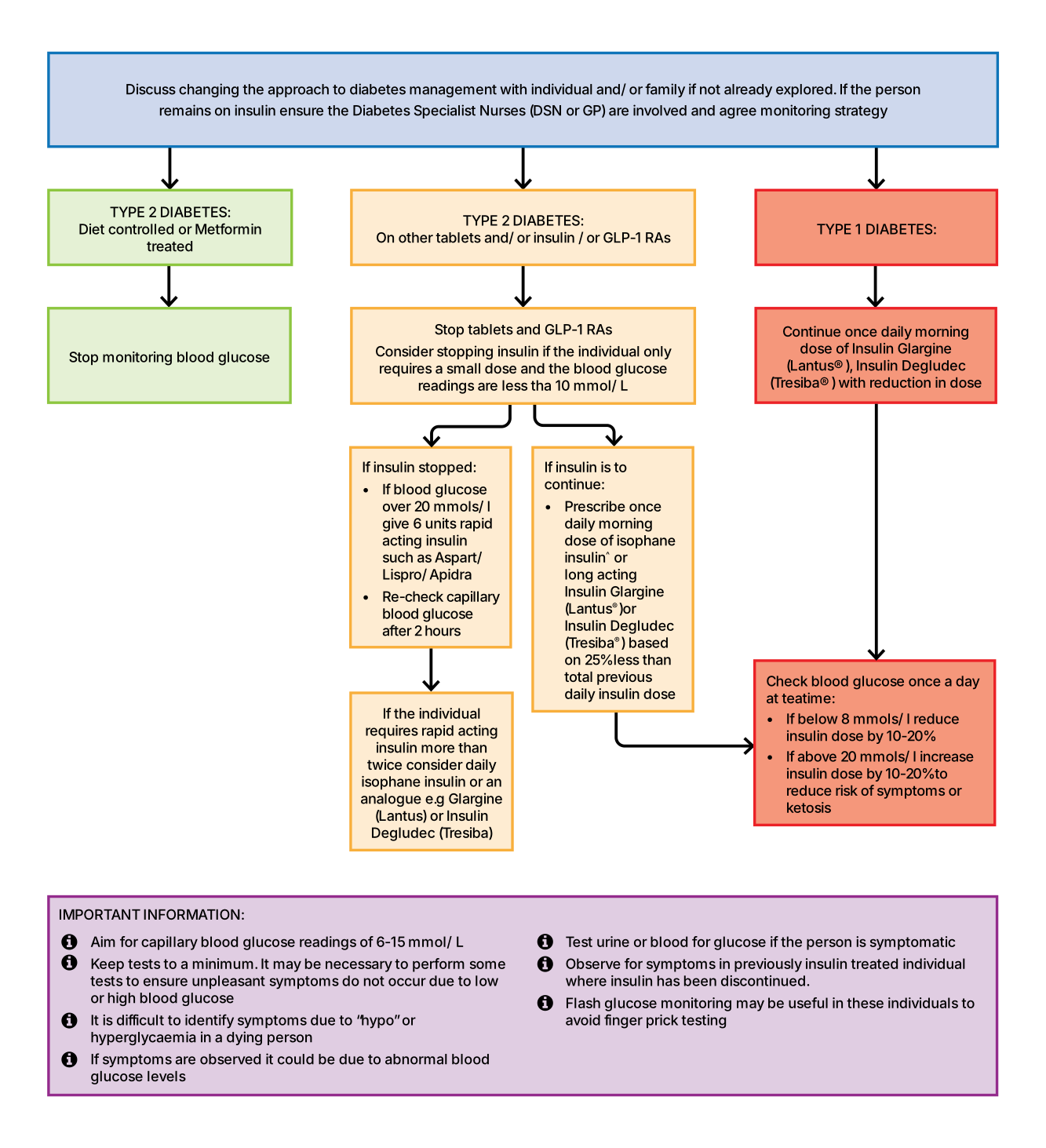
Diabetes
Section titled “Diabetes”- Type 1 Diabetes
- In the last few days of life can allow blood sugar readings >15 mmol/L if asymptomatic
- Once a patient is unconscious and/or not having any oral intake a reduction of insulin doses to 75% with a minimum of once daily blood sugar monitoring and titrate dose accordingly
- Generally will aim to continue a small dose of long acting insulin, even if only 1 unit for avoidance of DKA
- A decision to stop insulin should only be made with the involvement of the patient and/or those that care for them
- Type 2 diabetes
- Stop oral hypoglycaemic agents and blood sugar monitoring once patient is no longer taking oral medications
- If on insulin <15 units/24 hours consider stopping this
- If needing to continue insulin reduce dose to 75% usual and monitor blood sugars once a day titrating dose accordingly
- Hypoglycaemia (BM<4)
- Very common in final days of life as liver begins to fail and glucose reserves deteriorate, so may be a normal part of dying
- However, if on hypoglycaemic agents, aim to reverse hypoglycaemia with oral glucose if alert or IM glucagon if not, then titrate medications